
Bed Bug Treatment Failures: Why Re-infestation Happens and How to Stop It
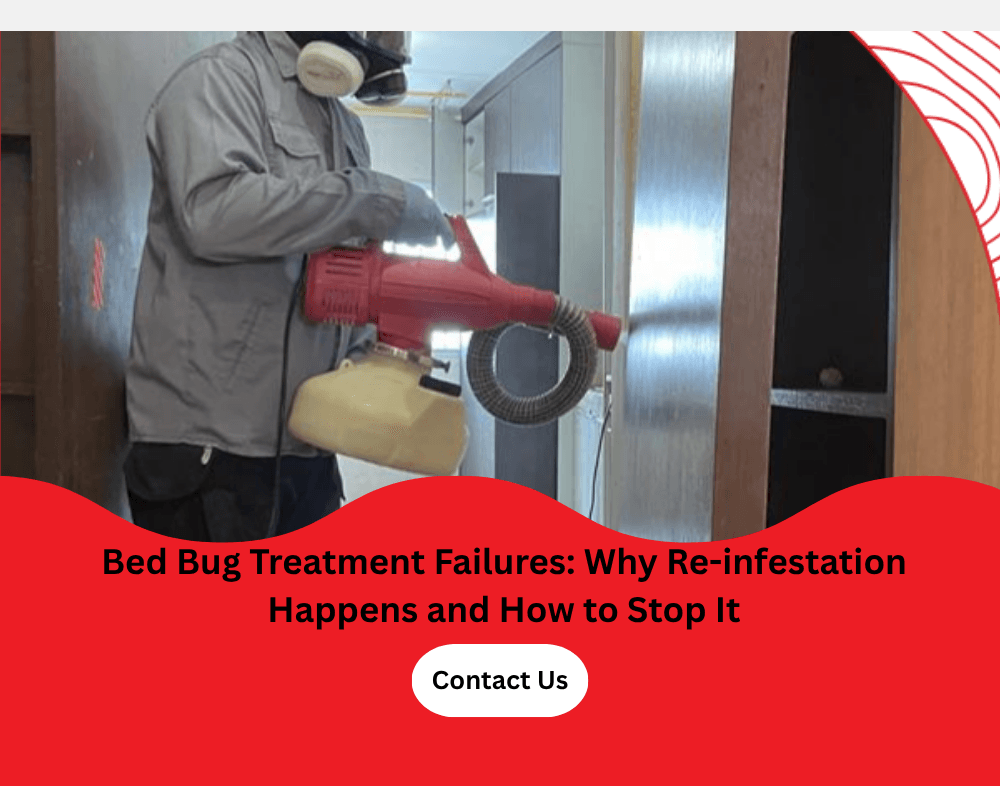
Bed bug infestations are notoriously persistent, and even professional bed bug treatment in Singapore can sometimes appear to fail. This is rarely because the treatment was ineffective. Rather, bed bugs are masters of hiding, and surviving eggs or overlooked colonies can reignite an infestation within weeks. Understanding why re-infestation occurs is essential for effective bed bug pest control near me and long-term prevention.
Why Bed Bugs Survive Professional Treatment
Bed bugs are adept at finding tiny hiding spots, making complete elimination challenging. Even a few surviving adults or eggs can restart an infestation. Common hiding places that are often missed during treatment include:
- Mattress seams and box springs – Dense layers shield bugs from sprays.
- Bed frames and headboards – Small cracks, joints, and screw holes offer perfect shelter.
- Skirting boards and wall-floor junctions – Superficially treated areas often leave bugs behind.
- Upholstered furniture – Sofas, chairs, and ottomans are frequently infested but overlooked.
- Curtains and curtain tracks – Soft, undisturbed fabric near sleeping areas is ideal for hiding.
- Clutter, luggage, and laundry hampers – Portable hiding spots rarely get treated.
In multi-unit buildings, such as HDB flats or condominiums, bed bugs can move through wall voids, electrical conduits, and shared pipe chases. Treating one unit without addressing neighbouring infestations often leads to re-infestation. This is a matter of incomplete treatment, not failure.
The Role of the Egg Cycle in Re-infestation
Bed bug eggs are another key reason infestations return. Eggs are tiny, cemented into cracks and fabric, and resistant to many insecticides. A newly hatched nymph can feed immediately and mature within weeks, potentially repopulating the room if follow-up visits are not scheduled.
Key points about the egg cycle:
- A single female lays 1–5 eggs per day, up to 500 in her lifetime.
- Eggs are protected from most sprays and survive a single application.
- Nymphs hatch within 6–17 days in Singapore conditions.
- Without follow-up treatment, populations rebound quickly.
For effective bed bug treatment Singapore, scheduled visits timed around the egg hatch cycle are crucial. A one-off spray is rarely sufficient to eliminate an infestation entirely.
Also Read – Fly Infestations in Commercial Kitchens: Causes and Effective Control
Insecticide Resistance and Its Impact
Bed bugs exposed repeatedly to the same insecticide class, especially pyrethroids, can develop resistance. Resistant bugs survive treatments that would otherwise be lethal. Over generations, these resistant individuals dominate the population.
Effective bed bug pest control near me addresses resistance by:
- Rotating insecticide classes to reduce selection pressure.
- Combining chemical treatments with non-chemical methods like heat or steam.
- Applying products at proper rates and full coverage.
- Monitoring post-treatment for survivors before populations recover.
Providers that rely on the same product for every visit may inadvertently strengthen resistance, making infestations harder to eliminate.
Re-introduction: A Hidden Cause of Recurrence
Even after successful treatment, bed bugs can return from outside sources. Re-introduction is common in high-density residential areas in Singapore. Frequent routes include:
- Travel luggage and clothing from infested hotels or transport.
- Visitors unknowingly carrying bugs on their clothes or bags.
- Second-hand furniture without inspection.
- Shared laundry facilities in condos or communal housing.
- Movement through wall voids or service ducts between units.
Preventing re-introduction requires vigilance alongside professional treatment. Interceptor traps under bed legs and periodic inspections can catch bugs before a small number of hitchhikers become a full infestation.
Common Reasons Bed Bug Treatment Appears to Fail
Bed bug treatment failures are typically due to:
- Missed harbourages – Areas like mattress seams, furniture, and skirting boards often go untreated.
- Egg hatching after treatment – Nymphs emerge from eggs that survived the initial application.
- Insecticide resistance – Repeated use of the same chemicals allows resilient bugs to survive.
- Re-introduction from external sources – Bugs can re-enter treated spaces from luggage, guests, or shared facilities.
A single-visit treatment rarely eliminates the infestation completely. Integrated approaches, follow-up visits, and monitoring are essential for successful results.
Also Read – How Much Does Professional Pest Control Cost in Singapore? Pricing, Value & Safety Explained
Getting Bed Bug Treatment Right
Effective bed bug treatment Singapore requires a comprehensive strategy:
- Thorough inspection – Identify all potential hiding spots, including furniture, skirting boards, and adjacent rooms.
- Non-chemical methods – Heat and steam treatments penetrate areas where sprays cannot reach.
- Scheduled follow-up visits – Timed according to the bed bug egg hatch cycle for maximum impact.
- Resistance-aware insecticide use – Rotate chemicals and combine with non-chemical treatments.
- Post-treatment monitoring – Use traps and inspections to detect survivors and re-introduction early.
In multi-unit buildings, adjacent units must also be considered. Treatment of only one unit is often insufficient, as bugs can migrate from untreated areas.
How ORIGIN Exterminators Approach Bed Bug Control
ORIGIN Exterminators implements an integrated program that addresses all causes of bed bug persistence:
| Aspect | ORIGIN Exterminators | Typical One-Off Provider |
| Treatment approach | Integrated pest management: inspection, heat/steam, targeted residuals, monitoring | Single-product spray application only |
| Egg cycle management | Follow-up visits timed to hatch cycle | No follow-up; eggs hatch unchecked |
| Harbourage coverage | Detailed inspection of all known hiding spots | Limited to bed and immediate area |
| Resistance management | Insecticide rotation, non-chemical methods | Same product class repeated |
| Post-treatment verification | Monitoring tools and post-treatment checks | No monitoring after treatment |
| Client guidance | Clear preparation instructions | Minimal guidance |
| Environmental responsibility | ISO 14001-certified, eco-friendly options | No certification |
This integrated approach ensures that the infestation is not only reduced but fully eliminated and monitored for potential re-introduction.
FAQs
Q: Why do bed bugs return even after professional treatment?
A: Surviving eggs and overlooked hiding spots can restart an infestation. Without follow-up visits timed to the egg cycle, new nymphs will repopulate the room.
Q: How long should I wait before assuming the infestation is gone?
A: Eggs hatch in 6–17 days. At least two to three follow-up visits within this period are recommended. Interceptor traps can help confirm success.
Q: Can bed bugs become resistant to sprays?
A: Yes. Continuous use of the same chemical selects for resistant bugs. Effective treatment rotates insecticide classes and combines chemical and non-chemical methods.
Q: Can neighbours cause re-infestation?
A: In multi-unit buildings, bed bugs can migrate through walls, ducts, and pipes. Treating only your unit without considering adjacent units may lead to recurring infestations.
Q: Is a single visit enough to eliminate bed bugs?
A: Rarely. Eggs survive initial treatment and hatch into nymphs. At least two to three follow-up visits with full coverage of hiding spots are necessary.
Q: How can I prevent re-introduction?
A: Inspect luggage, second-hand furniture, and visitor belongings. Use interceptor traps and schedule periodic inspections to catch new bugs early.
Final Thoughts
Persistent bed bug infestations are preventable with the right strategy. Effective bed bug treatment Singapore combines thorough inspection, full coverage of hiding spots, correctly timed follow-up visits, resistance-aware product use, and post-treatment monitoring. Cutting corners on any of these steps leaves room for the infestation to return.
For professional, reliable bed bug pest control near me, contact ORIGIN Exterminators. Our integrated program tackles every stage of the infestation cycle, ensuring long-term results. The goal is not just to reduce the infestation but to eliminate it at the source and prevent future recurrence.

