
The Psychology of Pests: Why Certain Spaces Attract Infestations More Than Others
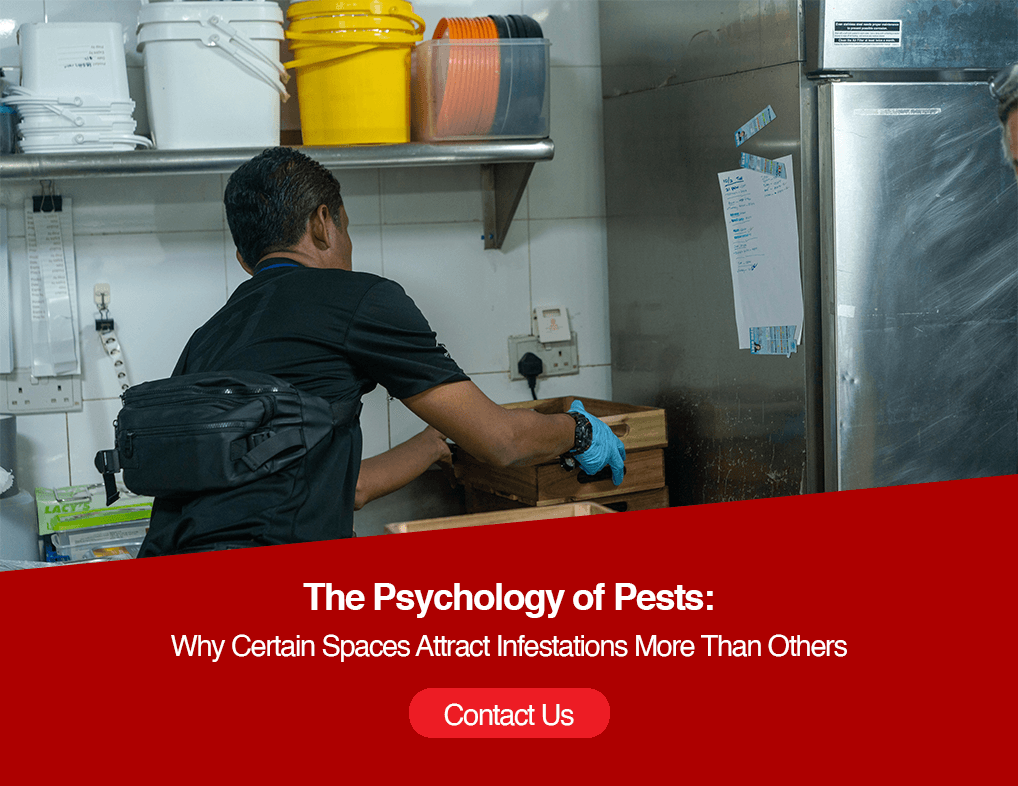
Certain spaces attract pest infestations far more than others, and it rarely comes down to cleanliness alone. The psychology of pests is rooted in biology, behaviour, and environmental conditions that make specific spaces irresistible to insects and rodents. If you have ever wondered why one property seems perpetually plagued while a neighbouring one stays clear, the answer lies in the conditions each space creates, often without the occupants realising it.
Understanding what draws pests to particular environments shifts the entire conversation from damage control to genuine prevention. Pests follow predictable biological imperatives, and those patterns leave clear signals for anyone who knows what to look for. Whether you manage a commercial property or a family home in Singapore, the conditions you create, intentionally or not, either invite pests in or keep them out.
ORIGIN Exterminators has spent over 35 years studying pest behaviour through a science-first lens, combining biological insight with data-driven solutions. What follows is a clear, practical look at the environmental and behavioural triggers that turn ordinary spaces into pest hotspots, and what you can do about it before an infestation takes hold.
How Pests Decide Where to Settle
Pests are not random. Every species follows predictable behavioural patterns driven by three core needs: food, water, and shelter. When a space reliably delivers all three, it becomes a target. This is not a matter of bad luck or poor housekeeping in isolation. It is a matter of environmental conditions aligning with the biological requirements of a given species. A cockroach does not wander into a kitchen by accident. It follows chemical signals, moisture gradients, and warmth toward a space that meets its survival criteria. Once it finds that space, it signals others.
For pest management to work, it must address the conditions driving these decisions rather than simply reacting after the fact. Treating a visible infestation without identifying what attracted pests in the first place is the equivalent of mopping up a leak without turning off the tap. ORIGIN’s Integrated Pest Management approach does exactly that, identifying root causes and environmental triggers through systematic inspection before deploying any control measures. Recognising that pest presence is a symptom of environmental conditions shifts the entire approach from reactive extermination to proactive management, and that shift makes a measurable difference in long-term outcomes.
The Role of Sensory Cues in Pest Attraction
Pests navigate primarily through chemical signals, heat detection, and moisture sensing. These are not crude systems. They are highly refined biological tools that allow pest species to locate resources efficiently across distances that would surprise most people. Mosquitoes, for instance, detect carbon dioxide, body heat, and lactic acid from up to 50 metres away. They are not drifting toward you by chance. They are following a precise chemical trail that your body broadcasts continuously.
Rodents rely on pheromone trails left by scouts to identify safe routes and food sources. Once a trail is established, it becomes a reliable corridor that other members of the colony follow. Cockroaches release aggregation pheromones that signal to others that a location is safe and resource-rich. This is why a single cockroach sighting so often precedes a larger population. The individual is not the problem. The signal it is sending to others is. Removing those sensory cues, by sealing entry points, eliminating moisture sources, and disrupting scent trails, is considerably more effective than targeting individual pests after they have already arrived and communicated the location to others.
Understanding these sensory systems also explains why surface-level cleaning, while important, is insufficient on its own. Pheromone residues persist on surfaces long after visible food debris has been removed. Moisture trapped behind walls or beneath appliances continues to attract pests even when the visible environment appears dry and clean. Effective prevention requires addressing what pests can detect, not just what humans can see.
Why Pest Behaviour Follows Predictable Patterns
Pest behaviour is largely instinctive and consistent across populations, which makes it both predictable and manageable when approached with the right methodology. Rats, for instance, exhibit neophobia, a wariness of new objects in their environment. This behavioural trait is precisely why traditional snap traps placed without strategic positioning rarely perform well. A rat that has established a route along a wall edge will avoid an unfamiliar object placed directly in its path, often for days, until it has assessed the object as non-threatening. By that point, the opportunity for early intervention has passed.
This is precisely why ORIGIN’s RATSENSE® system outperforms conventional methods. By monitoring movement patterns continuously and mapping activity zones across a property, the system identifies where rodents are most active before any physical intervention begins. Traps and control measures are then deployed at confirmed activity points rather than estimated locations, which is a fundamentally different approach. Acting on behavioural data rather than guesswork increases capture effectiveness by 30% and significantly reduces wasted effort, both in terms of technician time and material resources.
The same principle applies across species. German cockroaches follow harborage preferences so consistent that experienced pest managers can predict likely nesting zones before inspection begins. Termites follow moisture gradients toward timber with near-mechanical reliability. These patterns are not weaknesses in pest biology. They are simply the way these species have evolved to survive, and they are also the clearest possible guide to where preventive measures should be focused.
Structural Features That Create Pest Hotspots
The physical design of a building plays a significant role in its pest vulnerability. Gaps in foundations, poorly sealed utility conduits, ageing drainage systems, and flat rooftops that collect rainwater all create structural invitations that pest species are well equipped to find and exploit. In Singapore’s tropical climate, these features combine with persistent high humidity to produce conditions that many pest species find ideal throughout the year, not just during wetter months.
Commercial kitchens with hard-to-reach equipment gaps, warehouses with infrequently moved stock, and older residential blocks with shared pipe ducts are among the highest-risk environments from a structural standpoint. What makes structural vulnerabilities particularly challenging is that many of the most significant entry points are not visible during a casual walkthrough. They exist behind walls, beneath floors, or above ceiling panels, in the spaces where building services run and where human activity rarely reaches. A thorough inspection, the first step in any effective Integrated Pest Management programme, maps these access points systematically rather than relying on surface-level observation, giving property managers an accurate picture of where risk actually exists.
Entry Points Pests Exploit Most Often
The most common structural entry points include gaps around pipe penetrations, poorly fitted door sweeps, cracked skirting boards, and ventilation grilles without fine mesh. These are features that exist in the vast majority of buildings, and they are consistently overlooked during routine maintenance because they do not cause obvious operational problems. From a human perspective, a 6mm gap around a pipe penetration is negligible. From a rodent’s perspective, it is a door. Rodents can squeeze through openings as small as 6mm, roughly the diameter of a pencil. Cockroaches exploit gaps as thin as 1.5mm.
Once inside, pest species do not wander aimlessly. They establish harborage zones close to food and water sources, typically within wall cavities, beneath appliances, or inside equipment housing. These locations offer warmth, protection from disturbance, and proximity to resources, which is precisely the combination that allows populations to establish and grow before they become visible. Identifying and sealing structural entry points is a preventive measure that reduces infestation risk far more cost-effectively than repeated reactive treatments applied after a population has already taken hold.
Proofing work, the systematic sealing of identified entry points, is a core component of any well-designed pest management programme. It is also one of the most durable interventions available. A sealed gap does not require repeat application. It simply removes the access route permanently, reducing the environmental conditions that make a space attractive to pest species seeking entry from outside.
How Building Age and Layout Affect Risk
Older buildings carry accumulated structural wear that newer constructions avoid. Deteriorating seals around pipe penetrations, subsided flooring that creates gaps at skirting level, and ageing drainage infrastructure with cracked channels all represent access opportunities that worsen incrementally over time. In many cases, building maintenance schedules address visible cosmetic deterioration before they address pest-relevant structural gaps, which means the risk accumulates quietly between major renovation cycles.
Multi-storey commercial buildings present particular challenges because pest populations can migrate vertically through shared service ducts and plumbing channels. A rodent population established in a basement waste area can access upper floors through the same conduits that carry electrical and plumbing services throughout the building. In hospitality and food service environments, the combination of continuous food handling, high foot traffic, and complex layouts with multiple back-of-house zones creates persistent pressure points at nearly every level of the building.
Regular structural audits, combined with ongoing monitoring, are the only reliable way to stay ahead of evolving access routes as buildings age. A single inspection at lease commencement or following a pest incident provides a snapshot. Continuous monitoring provides a trend line, which is a far more useful tool for managing risk in buildings where structural conditions change gradually and pest pressure responds to those changes in real time.
Outdoor Environments That Feed Indoor Infestations
The outdoor environment surrounding a building directly influences the pest pressure inside it, yet outdoor conditions are frequently treated as a separate concern from interior pest management. They are not. Overgrown vegetation close to building walls provides both harborage and runways for rodents, allowing populations to establish close to entry points and move between outdoor and indoor environments with minimal exposure. Dense ground cover, stacked materials, and accumulated debris within the building perimeter create conditions that sustain outdoor pest populations that continuously test the building envelope for access.
Standing water in plant pot trays, blocked perimeter drains, and poorly maintained outdoor areas creates mosquito breeding conditions within metres of building entry points. Singapore’s year-round warmth means these outdoor reservoirs remain biologically active continuously, supporting breeding cycles without the seasonal interruption that occurs in cooler climates. A single blocked drain or neglected plant tray can sustain a mosquito breeding population large enough to create meaningful risk for building occupants.
Managing the outdoor environment is not optional when indoor pest pressure is a concern. Bin areas, landscaping, drainage channels, and perimeter surfaces all contribute to the overall pest risk profile of a property. Any effective management plan accounts for both the interior and the exterior, treating them as a connected system rather than separate concerns addressed by different teams or different schedules.
The Impact of Human Behaviour on Pest Pressure
Human activity patterns shape pest environments more than most people realise. The decisions made daily about food storage, waste disposal, cleaning schedules, and how spaces are organised have a direct and measurable effect on whether those spaces become attractive to pest species. Pests are opportunistic by nature. They exploit the gaps that human routines create, and those gaps are far more common than most occupants appreciate until a problem becomes visible.
In commercial settings, high-volume food preparation, inconsistent waste disposal schedules, and staff behaviour in back-of-house areas are frequent contributors to infestation risk. In residential spaces, clutter accumulation, infrequent deep cleaning of appliances, and leaving pet food accessible overnight are common triggers. The encouraging aspect of this dynamic is that behavioural changes are among the most cost-effective preventive tools available. Changing how a space is used and maintained costs nothing beyond awareness and consistency, yet it can significantly reduce the environmental conditions that make that space attractive to pest species.
Food Handling and Storage as Infestation Triggers
Improperly stored food is among the most reliable attractants for cockroaches, rodents, and stored product insects. Open packaging left on shelves, unsealed containers, and food debris accumulating in hard-to-reach areas behind appliances or beneath prep surfaces create persistent feeding opportunities that sustain pest populations long after any initial treatment. The challenge in food service environments is that the volume and pace of food handling makes perfect hygiene difficult to maintain consistently across every surface and every shift.
Even trace residues in equipment gaps or beneath prep surfaces are sufficient to sustain a cockroach population. These are not large food sources. They are microscopic by human standards. But cockroaches are efficient foragers, and a residue that registers as negligible during a cleaning inspection is entirely adequate as a food source for a population living within the wall cavity behind the same equipment. In food industry environments, HACCP-compliant pest management as provided by ORIGIN addresses these conditions through structured inspection protocols that identify contamination risks before they escalate into regulatory breaches or reputational damage.
For residential clients, the principles are the same even if the scale differs. Dry goods stored in their original paper or cardboard packaging, fruit left uncovered, and pet food bowls left out overnight are consistent attractants. Transferring dry goods to sealed containers, managing fruit storage, and removing pet food access outside feeding times are straightforward changes that meaningfully reduce the food signals a home broadcasts to pest species.
Waste Management Practices That Attract Rodents
Rodent populations are closely linked to the quality of waste management in and around a property. Bins without secure lids, infrequent collection schedules, and waste stored in accessible outdoor areas provide reliable food sources that sustain and grow rodent colonies over time. Rodents are not deterred by the smell of waste. They are attracted by it. An unsecured bin area is, from a rodent’s perspective, a consistent and low-risk food source, and populations will establish in proximity to reliable food sources with predictable efficiency.
In commercial properties, back-of-house waste areas are among the highest-risk zones for rodent activity. These areas often combine food waste with reduced human traffic during certain hours, creating ideal conditions for foraging. The problem compounds when waste collection schedules are irregular, allowing organic material to accumulate between collections. Consistent waste management practices, including secure bin lids, regular collection, and clean bin areas, are foundational to rodent prevention.
Combining disciplined waste management with perimeter monitoring creates a detection-and-response system that catches rodent activity early, before populations establish inside the building. RATSENSE® surveillance deployed at key access points and near waste areas provides continuous activity data, alerting ORIGIN’s team to emerging pressure before it becomes an established infestation. This combination of behavioural discipline and technology-backed monitoring is considerably more effective than either approach applied in isolation.
Clutter and Inactivity as Harborage Conditions
Spaces that remain undisturbed for extended periods offer pests safe harborage away from human activity. This is one of the most consistently underestimated risk factors in both residential and commercial environments. Stacked cardboard boxes, seldom-moved storage containers, and cluttered utility areas are favoured nesting zones for cockroaches and rodents alike. These spaces provide the combination of physical protection, warmth, and proximity to resources that pest species require to establish and maintain colonies.
In warehouses and storage facilities, infrequently rotated stock creates ideal conditions for stored product pests. Pallets that remain in the same position for weeks or months, racking systems with accumulated dust and debris, and dark corners with minimal foot traffic all contribute to harborage conditions that allow populations to develop undetected. By the time visible evidence emerges, the population is typically well established and the damage, whether to stock, surfaces, or wiring, has already occurred.
Regular rotation of stored goods, periodic decluttering, and scheduled inspections of low-traffic areas disrupt harborage conditions before they become established. These are operational disciplines rather than pest control interventions in the conventional sense, but they have a direct and meaningful impact on pest risk. Combining these practices with professional monitoring ensures that any activity that does occur in low-traffic zones is detected early rather than discovered after the fact.
Singapore’s Climate and Its Effect on Pest Activity
Singapore’s tropical climate, consistently warm temperatures between 25 and 34 degrees Celsius combined with humidity levels averaging 70 to 80 percent, creates near-perfect conditions for a wide range of pest species throughout the year. This is not a seasonal concern. It is a constant one. Unlike temperate climates where pest activity slows during colder months, giving properties a natural period of lower pressure, Singapore’s environment sustains continuous breeding cycles across virtually every pest species of concern.
Mosquitoes breed faster in warm, stagnant water. Cockroaches reproduce more rapidly in humid conditions. Termites thrive in moist timber and are drawn to areas with condensation buildup or water damage. The climate does not create pest problems on its own, but it removes the natural limits that cooler environments impose on breeding rates and population growth. This reality underpins the value of year-round monitoring programmes over single-visit reactive treatments. A property that receives a single treatment and no ongoing monitoring is not protected. It is simply starting a fresh countdown to the next infestation.
How Humidity Accelerates Pest Breeding Cycles
High humidity accelerates the reproductive cycles of many pest species in ways that compound quickly if left unmanaged. German cockroaches can produce up to six generations per year under optimal conditions, with warm temperatures and moisture availability being the primary drivers of that rate. A small initial population can become a significant infestation within weeks when humidity levels remain consistently high and food sources are accessible. This acceleration is why early detection matters so much in Singapore’s climate. The window between a manageable population and an established infestation is considerably shorter than it would be in a cooler, drier environment.
Termites require moisture to maintain their colonies and are drawn to water-damaged timber, areas with condensation buildup, and poorly ventilated subfloor spaces where humidity accumulates. A slow leak behind a wall or beneath a floor may not register as a maintenance priority until visible water damage appears, but the moisture gradient it creates can attract termite activity long before the structural damage becomes apparent. Reducing indoor humidity through proper ventilation, fixing leaks promptly, and maintaining drainage systems directly reduces the environmental conditions that accelerate pest reproduction and colony establishment.
For property managers and homeowners, this means that building maintenance and pest management are not separate disciplines. A poorly maintained plumbing system or an inadequately ventilated roof space is simultaneously a maintenance issue and a pest risk factor. Addressing both together, rather than treating them as unrelated concerns managed by different contractors on different schedules, produces better outcomes and lower overall costs.
Mosquito Breeding Patterns in Urban Singapore
Singapore’s urban density, combined with its warm and humid climate, creates consistent mosquito breeding pressure that requires active, ongoing management rather than periodic reactive treatment. Mosquitoes can breed in small volumes of stagnant water, including plant pot trays, roof gutters, construction site containers, floor traps, discarded receptacles, and any item that collects rainwater and is not emptied regularly. These breeding sites are often small, numerous, and located in areas that may not be part of routine inspection or cleaning schedules.
This is why mosquito management in urban environments cannot rely on visible adult mosquito activity alone. By the time mosquitoes are noticed around a building, garden, food service area, or external common space, breeding conditions may already exist elsewhere on the property. Effective management starts with identifying where water is collecting, assessing whether larvae are present, and correcting the environmental conditions that allow mosquito activity to continue.
ORIGIN’s 3+1 Mosquito Management Programme addresses this through a combination of systematic inspection, ORITrap monitoring, targeted misting where appropriate, source-reduction measures, and advisory. ORITrap is used as part of ORIGIN’s mosquito management system to monitor mosquito population levels, helping identify activity patterns, highlight potential hotspots, and guide appropriate next steps.
This data-informed approach supports more targeted decision-making. Instead of applying the same treatment intensity across an entire site regardless of actual conditions, inspection findings and mosquito activity trends can help indicate where follow-up action should be focused. Where breeding risks are identified, this may include water removal, drainage improvement, housekeeping recommendations, larvicide application where appropriate, or targeted treatment of high-risk zones.
For commercial properties operating under hygiene standards, public health expectations, or internal compliance requirements, this documentation carries practical value beyond pest control alone. A structured mosquito management programme helps show that the site is being actively inspected, monitored, and managed, rather than treated only after mosquitoes become visible or complaints arise.
High-Risk Commercial Environments and Why They Attract Pests
Certain commercial environments carry inherently higher pest risk due to the nature of their operations. Food and beverage businesses, healthcare facilities, hospitality venues, and logistics warehouses all share characteristics that make pest management both more challenging and more critical than in standard commercial settings. Continuous food handling, high foot traffic, complex building layouts, and large volumes of incoming goods create multiple entry and attraction points simultaneously, and the combination of these factors means that pest pressure in these environments is persistent rather than episodic.
For these businesses, a pest incident is not merely an operational inconvenience. It carries regulatory, reputational, and financial consequences that can significantly outweigh the cost of prevention. A single pest sighting in a food service environment can trigger regulatory inspection, result in temporary closure, and generate reputational damage that persists long after the immediate problem is resolved. Pest management in these environments requires a structured, compliance-aware approach that integrates with existing hygiene and safety protocols, treating pest risk as an operational concern rather than an afterthought addressed only when a problem becomes visible.
Food Service and Hospitality Venues
Restaurants, hotel kitchens, and food manufacturing facilities operate under conditions that require constant vigilance. Warm equipment surfaces, continuous food preparation across multiple shifts, and complex drainage systems that accumulate organic residue create multiple harborage and feeding opportunities within the same facility. The physical complexity of commercial kitchen environments, with equipment positioned close together and drainage channels running beneath floor surfaces, means that pest-relevant conditions exist in spaces that are genuinely difficult to inspect and clean thoroughly during routine operations.
Regulatory standards including NEA licensing requirements and HACCP compliance set clear benchmarks for pest management in these environments. Meeting those standards requires more than periodic treatment. It requires documented inspection schedules, monitoring records, and intervention logs that demonstrate an ongoing, systematic approach to pest risk. ORIGIN’s HACCP-compliant services provide exactly this structure, combining regular inspections with documented monitoring that supports both operational hygiene and regulatory audit readiness.
The reputational dimension of pest management in food service and hospitality cannot be overstated. A single photograph of pest activity shared on social media can reach an audience of thousands within hours. The investment in structured, professional pest management is, in this context, also an investment in brand protection. Prevention is measurably less costly than the combination of remediation, regulatory response, and reputation management that follows a visible pest incident in a public-facing food environment.
Warehouses and Logistics Facilities
Large storage facilities present specific pest management challenges that differ significantly from those in food service or office environments. High volumes of incoming goods that may carry pests in packaging or on pallets, extensive floor areas with limited daily human activity, and complex racking systems that create undisturbed harborage zones all combine to produce an environment where pest populations can establish and grow before they are detected. The sheer scale of warehouse environments means that traditional inspection-based approaches, relying on technicians physically checking each zone at scheduled intervals, inevitably leave gaps in coverage.
Rodents are particularly problematic in warehouse environments, where they can cause significant stock damage, contaminate goods, and compromise structural elements including electrical wiring. The financial cost of rodent damage in a warehouse environment can be substantial, and the operational disruption associated with a significant infestation, including stock quarantine, deep cleaning, and regulatory notification, adds further cost beyond the direct damage itself.
RATSENSE® continuous monitoring addresses this by mapping rodent activity across large floor areas in real time, identifying movement patterns, access points, and activity intensity without requiring physical inspection at every location. This enables targeted intervention at confirmed active zones rather than broad-spectrum treatment across the entire facility, reducing both chemical use and operational disruption. The system’s ability to generate immediate alerts when activity is detected means that ORIGIN’s team can respond to emerging pressure quickly, before populations establish at scale.
Healthcare and Residential Care Settings
Healthcare environments require pest management that is both highly effective and minimally disruptive to the people living or receiving care within them. Chemical-free methodologies are not simply a preference in these settings. They are often a practical necessity given the presence of patients with compromised immune systems, respiratory conditions, or chemical sensitivities. The standard pest control approaches that are appropriate in industrial or commercial settings may not be suitable in environments where vulnerable individuals are present continuously, including overnight.
ORIGIN’s chemical-free approach, supported by ISO 45001 occupational health and safety certification, provides the assurance that treatment methods are safe for vulnerable populations while remaining effective against target pest species. This combination of efficacy and safety is not a compromise. It reflects a methodology built on biological understanding and targeted intervention rather than broad chemical application. Treatments are designed to address pest behaviour at its source, using physical controls, biological agents, and monitoring technology rather than defaulting to chemical solutions.
Discreet service delivery and documented monitoring records support the operational standards that healthcare facilities maintain. Pest management visits that are planned, scheduled, and minimally disruptive to clinical or care routines are both practically necessary and professionally expected in these environments. The documentation that accompanies a structured programme also supports the accreditation and compliance requirements that healthcare facilities operate under, providing an auditable record of pest management activity that demonstrates due diligence to regulators and inspectors.
Frequently Asked Questions
Q: Does a clean home or business guarantee protection against pest infestations?
A: No, cleanliness alone is not enough because pests respond to moisture gradients, pheromone residues, and structural entry points that persist even in visibly clean spaces. Effective prevention requires addressing what pests can detect, not just what humans can see.
Q: Why does spotting one cockroach usually mean there are more hiding nearby?
A: Cockroaches release aggregation pheromones that signal to others that a location is safe and resource-rich, meaning a single sighting is often a sign that a population is already communicating and establishing nearby. Removing those chemical signals is far more effective than targeting the individual insect alone.
Q: How does Singapore’s humidity specifically make pest problems worse than in other countries?
A: Singapore’s consistently high humidity removes the seasonal breeding slowdowns that cooler climates provide, allowing species like German cockroaches to produce up to six generations per year and termites to thrive in moisture-rich timber year-round. This makes continuous monitoring far more critical than single-visit treatments.
Q: How does ORIGIN Exterminators approach pest control differently from standard extermination services?
A: Rather than reacting to visible infestations, ORIGIN uses an Integrated Pest Management approach that identifies environmental triggers, structural entry points, and behavioural patterns first, then deploys targeted interventions like RATSENSE® rodent monitoring and the 3+1 Mosquito Management Programme based on actual activity data. This science-first methodology increases effectiveness while reducing unnecessary chemical use.
Q: Can the layout and age of a building genuinely increase its risk of attracting pests?
A: Yes, older buildings accumulate structural wear including deteriorating pipe seals, subsided flooring, and cracked drainage channels that create access routes pests reliably exploit over time. Multi-storey buildings are especially vulnerable because rodents and insects can migrate vertically through shared service ducts connecting every floor.
Q: What everyday human habits most commonly turn a space into a pest hotspot?
A: Leaving dry goods in original cardboard packaging, allowing pet food to sit out overnight, and maintaining cluttered low-traffic storage areas are among the most consistent behavioural triggers that attract and sustain pest populations. These habits create the food access and undisturbed harborage conditions that pest species actively seek out.
Q: Why is outdoor maintenance relevant to controlling pests found inside a building?
A: Overgrown vegetation, blocked perimeter drains, and unsecured bin areas sustain outdoor pest populations that continuously test the building envelope for entry points, making interior infestations far more likely. Treating the indoor and outdoor environments as a connected system rather than separate concerns is essential for reducing overall pest pressure.

