1. Home
  2. »
  3. Commercial Pest Control
  4. »
  5. Healthcare

Healthcare(Clinics & Hospitals) Service

Sensitive, compliance-focused pest management for hospitals, clinics, and healthcare facilities — maintaining the highest standards of hygiene and patient safety.

Ants Extermination Service

Introduction to Ants

Ants are persistent pests that can infiltrate healthcare facilities through the smallest cracks and openings. Once inside, they form organized trails to food and moisture sources, quickly establishing large colonies that can grow up to 500,000 ants. In sensitive environments such as hospitals, clinics, and care centres, their presence can compromise hygiene standards and increase the risk of contamination. Due to their complex life cycles, basic or over-the-counter treatments are not effective in eliminating infestations.

Why Do I Have an Ant Infestation?

Ants are attracted to readily available food, water, and shelter—making healthcare settings vulnerable due to patient meals, waste disposal areas, and moisture-prone zones. Spills, improperly sealed food storage, and gaps in walls or flooring can all contribute to infestations. Even minor structural openings can allow ants to enter and spread unnoticed across different areas.

Effective ant control in healthcare environments requires a targeted and compliant approach. Professional pest management focuses on identifying entry points, eliminating colonies at the source, and implementing safe treatments that align with hygiene and safety standards in Singapore. This ensures minimal disruption to operations while maintaining a clean and controlled environment for patients, staff, and visitors.

Cockroach Extermination Service

The Sneaky Cockroach

Cockroaches are highly adaptable pests that can infiltrate healthcare facilities through small openings, drainage systems, and even via supplies or equipment. They are extremely resilient, reproduce rapidly, and can survive in hidden areas such as kitchens, storage rooms, waste disposal zones, and utility spaces. In sensitive environments like hospitals and clinics, their presence poses serious hygiene risks. Cockroaches are known carriers of harmful bacteria, pathogens, and allergens, which can contaminate surfaces and compromise infection control standards. In Singapore, the most common species include German cockroaches (smaller, fast-breeding) and American cockroaches (larger and often found in drains and basements).

Why Do Cockroach Infestations Occur in Healthcare Facilities?

Healthcare environments can attract cockroaches due to the presence of food sources, moisture, and shelter. Patient meal areas, waste bins, drainage systems, and damp utility zones create ideal conditions for infestation. Even minor gaps, cracks, or poorly sealed entry points can allow cockroaches to enter and spread across critical areas.

Effective cockroach control requires a professional and compliant approach. Targeted treatments focus on eliminating infestations at the source while adhering to strict hygiene and safety standards in Singapore. Integrated pest management ensures minimal disruption to healthcare operations while maintaining a safe and sanitary environment for patients, staff, and visitors.

Rodent Extermination Service

When You Smell a Rat...

Rodents are among the most serious pests in healthcare environments due to their ability to transmit diseases, contaminate surfaces, and damage critical infrastructure. In Singapore, common species include the Norway Rat, Roof Rat, House Mouse, and Asian House Shrew, which can be found in sewers, building interiors, and surrounding outdoor areas. Rodents have continuously growing teeth, leading them to gnaw on electrical wiring, medical supplies, storage materials, and structural components. This behaviour not only causes property damage but also increases the risk of contamination and safety hazards. Their ability to hide in ceilings, wall voids, and service ducts makes them particularly difficult to detect and control without professional intervention.

Why Do Rodent Infestations Occur in Healthcare Facilities?

Healthcare facilities can attract rodents due to the availability of food waste, water sources, and sheltered environments. Waste disposal areas, kitchens, storage rooms, and poorly sealed entry points can all contribute to infestations. Once inside, rodents reproduce rapidly—a single pair can multiply into a large infestation within a short period if left unmanaged.

Effective rodent control requires a proactive and compliant approach. Professional pest management includes thorough inspection, identification of entry points, and integrated monitoring systems combined with targeted treatments. These measures ensure long-term control while maintaining strict hygiene and safety standards in Singapore’s healthcare settings.

Mosquitoes Extermination Service

Don't Let Mosquitoes Breed

Mosquitoes are a significant public health concern in healthcare environments as they transmit viruses that cause diseases such as dengue and malaria. Even when not life-threatening, mosquito bites can lead to irritation, swelling, and discomfort—impacting patient recovery and overall comfort. In Singapore, common species include Aedes, Anopheles, and Culex, all of which can breed rapidly in even the smallest amounts of stagnant water.

Healthcare facilities, with their outdoor areas, drainage systems, and utility zones, can unintentionally create breeding grounds if not properly maintained. Standing water in drains, containers, gutters, or poorly maintained areas can quickly lead to mosquito proliferation.

Why Is Mosquito Control Critical in Healthcare Facilities?

Preventing mosquito breeding is essential to reduce the risk of disease transmission and maintain strict hygiene standards. Regular inspections, proper drainage management, and elimination of stagnant water sources are key to effective control.

Professional mosquito management combines targeted treatments such as fogging, larviciding, and source reduction to address both adult mosquitoes and breeding sites. Integrated programmes provide long-term protection while ensuring compliance with Singapore’s environmental and safety regulations, with minimal disruption to healthcare operations.

ORIGIN does offer a combination of fogging, larviciding, and source reduction if this is your preference. However we do recommend our 3+1 Mosquito Management Programme instead. Our ultimate aim is to keep mosquitoes out of your premises. Trust ORIGIN for expert mosquito control in Singapore in both Residential and Commercial spaces.

Bed Bugs Extermination Service

Don't Let the Bed Bugs Bite

Bed bugs are small but highly disruptive pests that feed on human blood, causing itchy welts, redness, and discomfort. In healthcare environments such as hospitals, clinics, nursing homes, and patient wards, their presence can impact patient comfort, recovery, and overall hygiene standards. Bed bugs are commonly found in cracks and crevices around beds, mattresses, upholstered furniture, curtains, and wall fixtures.

In Singapore, bed bug infestations can spread quickly through patient belongings, linens, staff areas, and shared spaces. Each female bed bug can lay multiple eggs weekly, allowing infestations to grow rapidly if not addressed. Early detection and professional treatment are critical to preventing widespread issues within healthcare facilities.

How Can Healthcare Facilities Reduce Bed Bug Infestations?

Strict housekeeping and regular inspections are essential in managing bed bug risks. Routine laundering of linens at high temperatures, frequent vacuuming, and thorough inspection of beds, furniture, and storage areas help in early identification. Sealing cracks, reducing clutter, and maintaining proper hygiene protocols further minimize hiding spots.

However, bed bugs are resilient and often require specialised treatment. Professional pest control ensures complete eradication, including hidden infestations, using safe and compliant methods suitable for healthcare environments in Singapore. This helps maintain a clean, safe, and comfortable space for patients, staff, and visitors.

Booklice Extermination Service

Introduction to Booklice

Also known as psocids, booklice are tiny insects that thrive in humid environments and feed on microscopic mould and mildew. In healthcare facilities, they are commonly found in medical records rooms, storage areas, pharmacies, and on materials such as paper files, cardboard cartons, and upholstered furniture. They may also appear in wall voids, cabinets, and areas with poor ventilation.

While booklice are not harmful to humans or patients, their presence indicates excess moisture and potential mould growth—both of which are concerns in healthcare settings. Measuring only 1–2 mm in length, these pale, soft-bodied insects can multiply quickly under favourable conditions and may damage sensitive documents, packaging, and stored materials.

Why Do Booklice Infest Healthcare Facilities?

Booklice infestations are typically caused by high humidity, inadequate ventilation, and the presence of mould or fungi. In healthcare environments, this can occur in storage rooms, archives, or areas with controlled but poorly circulated air. Damp, warm, and undisturbed spaces create ideal breeding conditions.

Effective control focuses on moisture management, improved ventilation, and elimination of mould sources. Professional pest management includes thorough inspection, identification of affected areas, and targeted treatment to prevent recurrence—ensuring compliance with hygiene and safety standards in Singapore healthcare facilities.

Flies Extermination Service

Shoo, Fly, Don't Bother Me

Flies are a serious hygiene concern in healthcare environments due to their ability to carry and transmit harmful bacteria and pathogens. Commonly found around food preparation areas, waste disposal zones, and high-traffic spaces, flies can contaminate surfaces and increase the risk of infections. They are known carriers of organisms linked to diseases such as E. coli, salmonella, and other foodborne illnesses.

In Singapore’s warm and humid climate, flies can reproduce rapidly, making infestations difficult to manage without proper control measures. Their presence in hospitals, clinics, and care facilities can compromise strict hygiene and infection control standards.

Why Do Fly Infestations Occur in Healthcare Facilities?

Fly infestations are typically caused by environmental conditions that support their breeding and feeding. Organic waste, food residue, and poorly managed garbage areas can quickly attract flies. Open bins, inadequate cleaning practices, and moisture-prone areas further contribute to the problem.

Effective fly control requires a comprehensive and compliant approach. Professional pest management focuses on identifying breeding sources, improving sanitation practices, and applying targeted treatments to reduce fly populations and prevent recurrence—ensuring a clean, safe, and controlled healthcare environment.

Frequently Asked Questions

Healthcare environments house immunocompromised patients, critical equipment, and sterile supplies — all of which can be severely compromised by pest activity. Cockroaches and rodents carry pathogens that pose direct infection risks. Flies near clinical waste and patient areas present similar dangers. ORIGIN understands these sensitivities and delivers healthcare pest management that meets the strict standards expected by MOH and JCI-accredited institutions.

ORIGIN uses only the safest, most targeted treatment formulations in clinical settings — prioritising gel baits, tamper-resistant bait stations, and monitoring devices over broad-spectrum sprays wherever possible. Treatments are carefully scheduled around patient care, cleaning cycles, and ward rounds. All products used in healthcare environments are selected for their safety profile and minimal residual risk.

ORIGIN's healthcare service teams work closely with your facilities management to schedule all services outside of peak patient activity periods. We are experienced in working across hospital zones — from clinical wards and pharmacies to catering kitchens and waste disposal areas — and always follow the site's specific access and infection control protocols.

ORIGIN provides comprehensive service reports after every visit, including inspection findings by zone, treatments applied, pest trend data, and corrective action recommendations. Our reporting format is designed to support audit requirements under JCI, MOH licensing, NEA regulations, and internal infection control frameworks. Digital access to service history is available for facilities requiring real-time records.

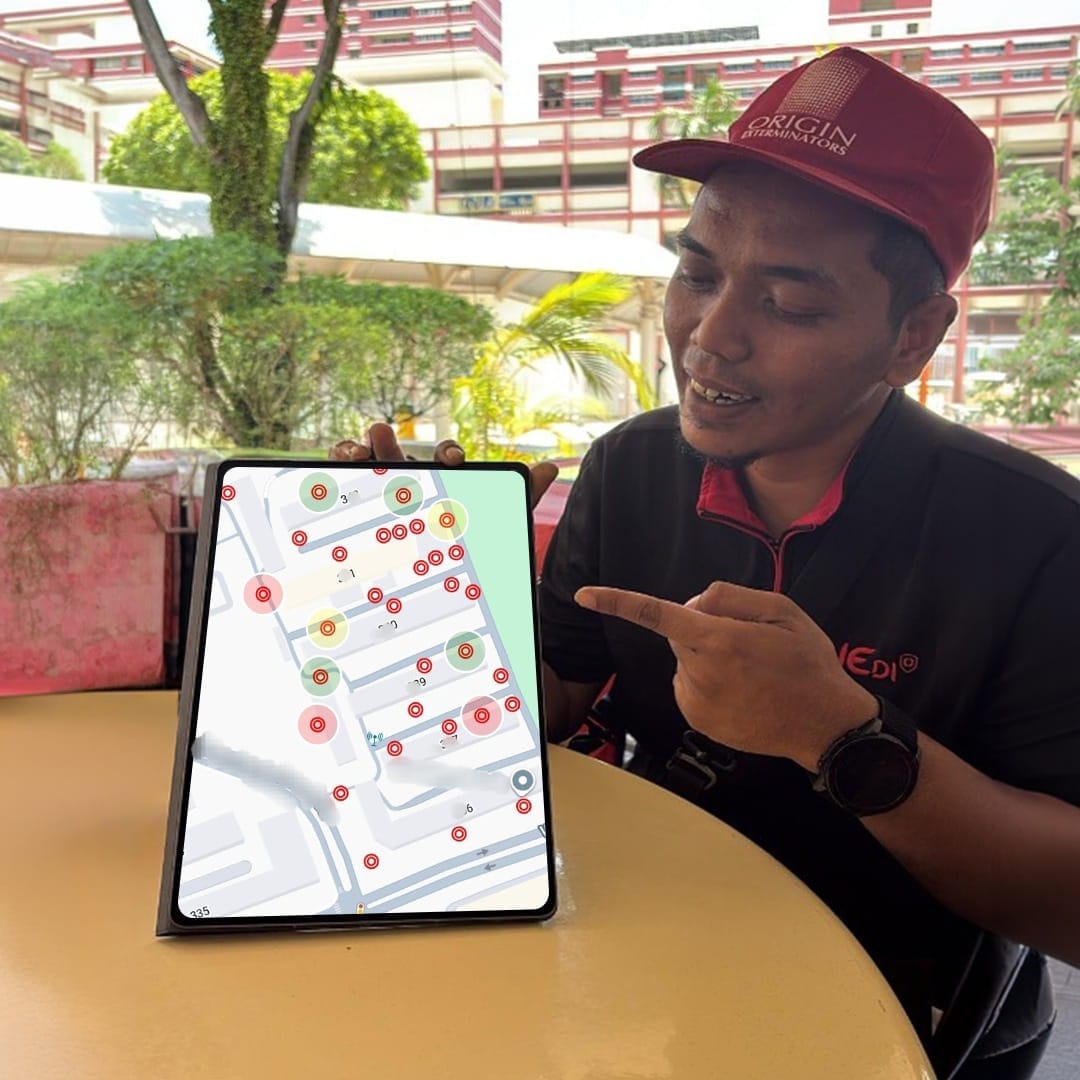
Hospital food service areas require the same rigorous food safety pest control approach as any SFA-licensed F&B operation, with the additional sensitivity of the healthcare environment. ORIGIN deploys tamper-resistant bait stations in non-food-contact zones, ILTs for fly control, and digital RATSENSE® monitoring where 24/7 visibility is required — all coordinated with your kitchen's operating schedule.

Yes. ORIGIN has experience in the pharmaceutical and biotech sector and understands the specific documentation, clean-room adjacency requirements, and compliance standards that apply. Our IPM programme for pharmaceutical clients is designed to protect product integrity while meeting GMP, NEA, and site-specific regulatory requirements.

For healthcare campuses, ORIGIN recommends the 3+1 Mosquito Management Programme, which provides systematic source reduction, larval monitoring, biological control, and adult mosquito treatment. This multi-layered mosquito control service significantly reduces dengue risk across outdoor patient areas, courtyards, and staff spaces — a critical concern for any facility caring for vulnerable individuals.

ORIGIN prioritises urgent pest response for all healthcare clients. We understand that a pest sighting in a clinical area requires immediate action. Our team will arrange the fastest possible response, conduct a thorough inspection, and implement appropriate treatments while maintaining full compliance with your facility's infection control and patient safety protocols.

Request Quote

GET IN TOUCH

General enquiries and contract-related matters
SALES@ORIGIN.COM.SG
Questions about your pest management program
QA@ORIGIN.COM.SG
Concerns with service standards and appointments
OPERATIONS@ORIGIN.COM.SG
OPERATING HOURS:

MONDAY - FRIDAY 8:30AM - 6:00PM
SATURDAY 8:30AM - 1:00PM
SUNDAY closed

    Let's Talk

    Get a free consultation for your pest issues, or share your feedback with us so we can do better.

    Upload Photo(Maximum file size of 4MB)