
Why Traps Alone Can’t Solve Your Rodent Problem
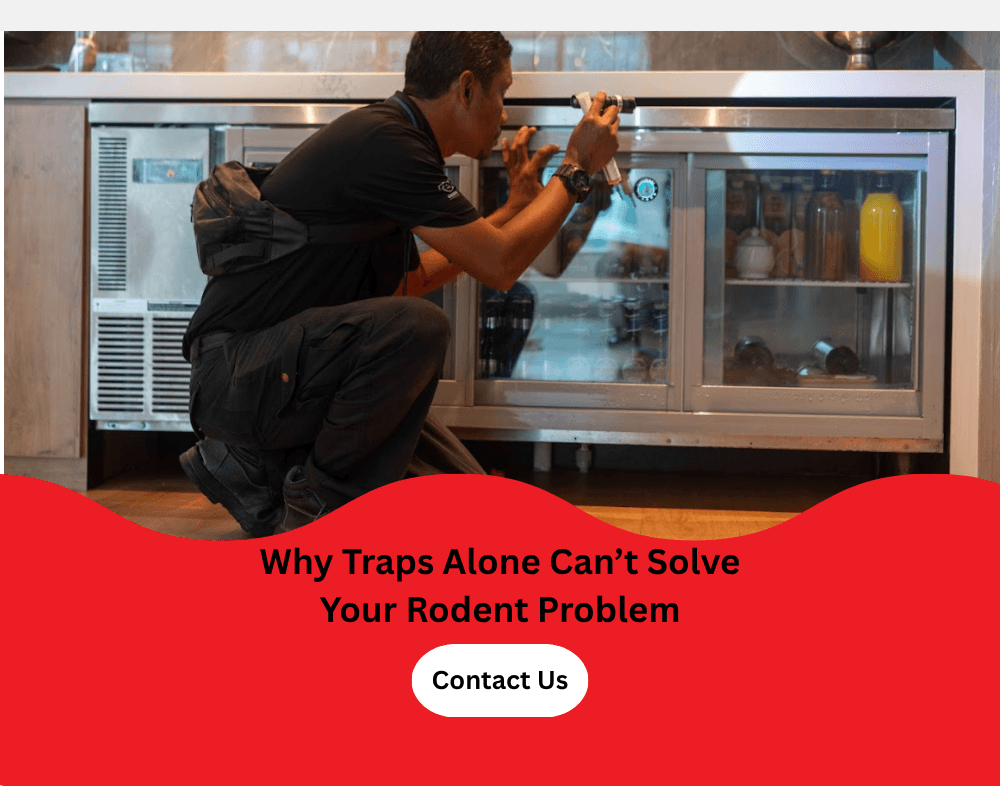
Rodent infestations are a persistent challenge in urban Singapore. According to NEA data, complaints about rodents in HDB estates, food centres, and commercial areas continue to rise. Despite this, many property managers still rely on traditional snap traps or glue boards as the default solution. The problem isn’t the traps themselves—it’s the lack of a strategic monitoring system behind them.
Singapore’s dense urban environment—with interconnected HDB blocks, hawker centres, MRT corridors, and food hubs—provides ideal conditions for rats to thrive and move freely. A single breeding pair can produce up to 2,000 offspring in a year. Without understanding the colony’s activity, movement patterns, and entry points, simply placing traps is insufficient. Effective rodent control requires a comprehensive, data-driven approach.
1. Traps Only Catch Rodents After Damage Is Done
Standalone traps are reactive. By the time a trap records its first catch, the rodent colony has usually been active for weeks—contaminating food, spreading disease, and gnawing structures. Traps remove individual rodents but do not detect infestations, track their scope, or identify sustaining conditions.
Rodents are naturally neophobic, avoiding new traps for up to 14 days. During this time, colonies continue expanding. In commercial kitchens, warehouses, or HACCP-regulated environments, this window creates significant hygiene and compliance risks.
Key Insight: Early detection through a rodent monitoring system Singapore is critical. It provides real-time data on droppings, grease trails, gnaw marks, and sensor alerts, allowing pest managers to act before damage occurs.
2. Urban Singapore Accelerates Re-Infestation
Rats do not respect property boundaries. They move efficiently through drains, false ceilings, shared walls, and inter-unit gaps. A trap inside a unit only removes rodents already present—it does not prevent new waves entering from neighbouring areas.
Older HDB blocks, shophouses, and mixed-use buildings form a continuous “rodent highway,” connecting units and floors. Without perimeter monitoring, properties quickly face re-infestation even after interior traps succeed.
High-pressure zones like hawker centres and food courts sustain large external rodent populations. Internal traps alone cannot reduce this external pressure. Regulatory compliance in HACCP environments demands documented evidence of ongoing surveillance and activity trend analysis, not just catch counts.
Seasonal fluctuations also affect rodent activity. Rainy months or public holidays increase food availability and colony movement. Only a continuous rodent monitoring system Singapore can track these patterns, allowing proactive adjustments to control programs.
3. Data-Driven Placement Outperforms Guesswork
Traps are only effective if placed where rodents are actively moving, feeding, and sheltering. Traditional daytime inspections capture only a fraction of activity, often missing nocturnal patterns. Droppings and grease trails indicate past activity but cannot reliably identify current high-traffic routes.
RATSENSE®, ORIGIN’s sensor-equipped system, transforms surveillance into precision trap placement. Sensors log rodent activity 24/7, identifying real-time runways and harbourage areas. This evidence-based approach improves trap effectiveness by 30%, reducing manpower requirements by 50% compared to standard trap deployments.
For commercial sites with multiple zones, this precision ensures fewer traps are placed more effectively, maximizing coverage and disrupting colonies efficiently.
4. Catch Counts Misrepresent Colony Size
Relying on trap catch counts is misleading. Catching a few rats may seem like progress, but in reality, the colony can reproduce faster than traps remove rodents. Traditional metrics measure removal, not actual infestation pressure.
Monitoring systems track activity across multiple zones, providing a true picture of population intensity and infestation severity. For HACCP and NEA compliance, auditable records of rodent activity, hotspots, and program adjustments are essential.
Warning: A drop in trap catches does not always indicate success. It may reflect trap avoidance, a behavioural adaptation where rodents learn to avoid previously triggering devices. Only continuous monitoring can differentiate genuine population decline from trap evasion.
Also Read – Best Alternatives to Chemical Pest Control in Singapore: Safer Methods That Deliver Results
5. Monitoring Reduces Costs and Improves Efficiency
Many property managers see monitoring technology as an additional cost. In reality, reactive trap programs generate ongoing expenses through frequent technician visits, repeat treatments, and product replacement, often without addressing the root problem.
A rodent monitoring system Singapore allows remote assessment of activity levels, directing technician time only where and when needed. This demand-driven approach reduces unnecessary site visits while improving outcomes.
Undetected infestations can cause costly property damage, gnawing electrical wiring, insulation, and structural materials. Commercial exposure includes food contamination, regulatory penalties, reputational damage, and potential NEA closure orders. Early monitoring flags rising activity before it escalates, preventing expensive crises.
Smarter Rodent Control
Traps have their role, but without intelligence behind them, they are reactive tools for a proactive problem. In Singapore’s dense urban environment, structural and external pressures make monitoring indispensable.
A rodent exterminator using sensor-driven systems like RATSENSE® can identify real-time rodent activity, map movement corridors, and strategically place interventions. This transforms rodent management from reactive to predictive and preventive, significantly increasing program effectiveness.
Also Read – How Smart Pest Control Systems Work in Singapore: Sensors, Data & 24/7 Monitoring Explained
Frequently Asked Questions
Q: Why do snap traps fail despite placement along walls and entry points?
A: Rats are neophobic and avoid new traps for up to two weeks. Without monitoring data identifying established movement corridors, trap placement is largely guesswork.
Q: How quickly can rodents re-infest Singapore properties?
A: Re-colonisation can occur within days due to shared drains, utility conduits, and inter-unit gaps. Only perimeter monitoring can prevent re-infestation.
Q: Does a drop in trap catches mean the infestation is under control?
A: Not necessarily. Reduced catches may indicate trap avoidance. Only a rodent monitoring system in Singapore can confirm whether population pressure has truly declined.
Q: How does RATSENSE® improve rodent control?
A: Sensors log activity continuously, enabling precise trap placement where rodents are active. This improves capture effectiveness by 30% and reduces manpower by 50%.
Q: What metrics do NEA and HACCP auditors expect?
A: Auditors require evidence of continuous tracking, hotspot identification, and program adjustments based on data trends—beyond simple catch logs.
Q: Why is being near a hawker centre a challenge?
A: External rodent populations create ongoing pressure. Interior traps alone cannot reduce the source of infestation; surveillance data mapping activity direction is required.
Q: Is monitoring more cost-effective than traditional traps?
A: Yes. Monitoring-driven programs focus resources where needed, preventing repeated visits and long-term costs, while resolving underlying infestations more effectively.
Conclusion
Relying solely on traps is insufficient for effective Rat Control Singapore. True success comes from a combination of expert intervention, data-driven placement, and continuous monitoring. Integrating a rodent monitoring system Singapore ensures early detection, precise trap placement, and sustainable infestation control, transforming rodent management from guesswork to a scientifically backed program.
For businesses and homeowners in Singapore, partnering with a professional rodent exterminator who leverages advanced monitoring technology is the key to reducing infestation risks, ensuring regulatory compliance, and safeguarding health and property.

