
Why Pest Control Keeps Failing in Singapore
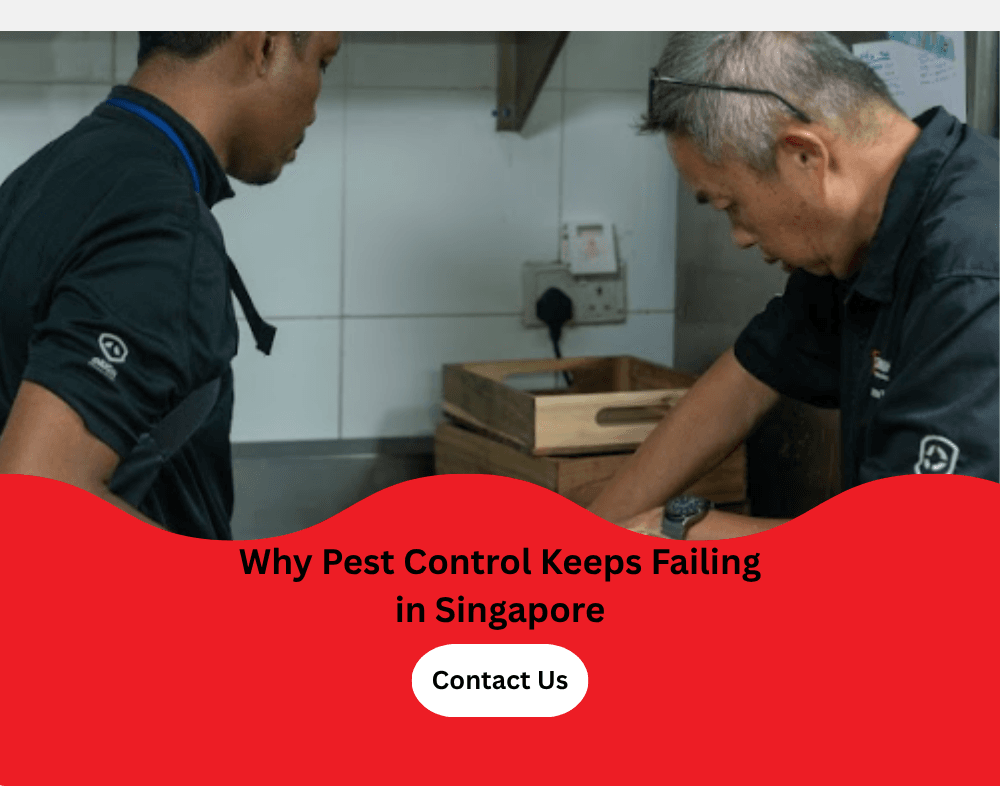
Most pest control Singapore treatments fail because they address the wrong problem. Instead of targeting the conditions that allow pests to thrive, they focus only on visible infestations. In a tropical environment like Singapore—where humidity exceeds 80% and temperatures remain between 27°C and 31°C year-round—this approach is fundamentally ineffective.
Pest infestations are not random. They are predictable outcomes of environmental conditions, structural gaps, and biological cycles. When these root causes are ignored, pest populations may temporarily decline after treatment but inevitably return. This is why many pest control services in Singapore struggle to deliver long-term results.
This article breaks down the key reasons why pest control fails and what a more effective, data-driven pest management Singapore approach looks like.
1. Treatments Focus on Pests, Not Root Causes
Most conventional pest control Singapore visits follow a simple pattern: apply treatment, reduce visible pests, and leave. What is often missing is a detailed inspection to identify why the infestation occurred.
In Singapore’s dense urban environment, pest pressure is constant. Without addressing:
- Harbourage areas
- Moisture accumulation
- Structural entry points
- Food sources
any treatment becomes temporary.
The Importance of Inspection
A proper inspection is not just a formality—it is the foundation of effective pest management Singapore. It identifies:
- Hidden nesting zones
- Drainage and moisture issues
- Structural vulnerabilities
- High-risk contamination areas
Without this data, treatments are generic and reactive.
For example:
- Cockroaches often nest behind kitchen units or false ceilings
- Rodents exploit roof voids and drainage gaps
- Termites operate below ground, untouched by surface treatments
Skipping inspection leads to repeated infestations, regardless of how often treatments are applied.
Root Cause vs Symptom Control
Eliminating visible pests does not eliminate the infestation.
- Cockroach egg cases can survive surface sprays
- Rodent colonies quickly recover if food and shelter remain
- Termite colonies continue functioning underground
Effective pest control services Singapore must disrupt the pest lifecycle—not just reduce visible numbers.
Also Read – Safer Pest Control Methods That Actually Work
2. Singapore’s Climate Makes One-Off Treatments Ineffective
Singapore’s climate allows pests to breed continuously. There is no seasonal slowdown.
- Mosquitoes can complete a breeding cycle in under 7 days
- Cockroach populations double within weeks
- Rodents reproduce year-round
This makes single treatments structurally inadequate.
Continuous Monitoring vs One-Time Visits
A one-off pest control Singapore treatment may reduce activity temporarily, but without follow-up:
- Populations recover quickly
- New breeding cycles begin
- Infestations return before the next visit
Effective pest management Singapore requires:
- Scheduled monitoring
- Data-driven interventions
- Ongoing adjustments
Why Reactive Pest Control Fails
Waiting for visible pest activity before taking action is inefficient.
By the time pests are seen:
- Colonies are already established
- Movement pathways are developed
- Infestation spread is underway
Proactive, interval-based monitoring detects early activity, enabling faster and more effective control.
3. Chemical Overuse Is Reducing Effectiveness
Repeated use of the same chemical treatments leads to resistance. This is a growing issue in Singapore’s urban environments.
In high-density areas:
- Multiple providers use similar chemicals
- Pests are exposed repeatedly
- Resistant populations emerge
Over time, treatments become less effective, even when applied more frequently.
Smarter Alternatives to Chemical Dependency
Modern pest management Singapore strategies focus on:
- Biological controls
- Targeted baiting
- Physical exclusion
- Behavioural disruption
These approaches:
- Reduce reliance on chemicals
- Prevent resistance development
- Deliver longer-lasting results
The goal is not to eliminate chemicals entirely, but to use them strategically rather than routinely.
4. Shared Infrastructure Drives Re-Infestation
Singapore’s buildings—whether HDB flats, commercial complexes, or food establishments—are interconnected environments.
Pests move through:
- Drainage systems
- Electrical conduits
- Wall cavities
- Service risers
This means treating a single unit rarely solves the problem.
Why Single-Unit Treatment Fails
Even after treatment:
- Cockroaches can re-enter from adjacent units
- Rodents continue accessing shared pathways
- Infestations re-establish within weeks
The issue is not the treatment—it’s the limited scope.
Building-Level Pest Management
Effective pest control Singapore must operate at a broader level:
- Entire building inspections
- Coordinated treatment plans
- Identification of shared entry points
Without this, infestations persist despite repeated treatments.
For property managers, this highlights the need for structured pest management Singapore programmes rather than isolated service visits.
5. Lack of Data Leads to Repeated Failures
One of the biggest gaps in traditional pest control services Singapore is the lack of measurable data.
Most service reports include:
- Visit dates
- Treatment applied
- Pests observed
But they rarely include:
- Population trends
- Activity patterns
- Effectiveness metrics
Without this, there is no way to evaluate success or adjust strategy.
What Effective Pest Data Looks Like
A strong pest management Singapore programme tracks:
- Activity levels across locations
- Environmental conditions
- Treatment impact over time
- Recurrence patterns
This transforms pest control from a reactive service into a managed system.
Why Data Matters
Without data:
- Infestations recur without explanation
- Ineffective treatments continue
- Root causes remain unresolved
With data:
- Early detection becomes possible
- Treatments are targeted and efficient
- Long-term control becomes achievable
What Effective Pest Management Looks Like
To succeed in Singapore’s environment, pest control Singapore must evolve from reactive treatment to proactive management.
An effective approach includes:
1. Integrated Pest Management (IPM)
- Root cause identification
- Targeted interventions
- Lifecycle disruption
2. Continuous Monitoring
- Regular inspections
- Data-driven adjustments
- Early detection systems
3. Reduced Chemical Dependence
- Strategic product use
- Biological and mechanical controls
- Resistance prevention
4. Building-Level Strategy
- Coordinated treatment across units
- Infrastructure-focused solutions
- Shared risk management
5. Data-Driven Decision Making
- Measurable outcomes
- Performance tracking
- Continuous improvement
Also Read – DIY vs Professional Rat Control in Singapore: When Technology-Driven Solutions Are Necessary
Frequently Asked Questions
Why do pest infestations keep returning in Singapore?
Because most pest control services Singapore focus only on visible pests, not the environmental conditions that allow them to thrive. Without addressing root causes, infestations will return.
Is one-time pest control effective?
In Singapore’s climate, one-off pest control Singapore treatments rarely provide lasting results. Continuous monitoring and structured programmes are far more effective.
Are pests becoming resistant to treatments?
Yes. Overuse of chemicals has led to resistance in pests like cockroaches, reducing the effectiveness of traditional treatments.
Why doesn’t treating one unit solve the problem?
Pests move through shared building infrastructure. Without building-level pest management Singapore, infestations will reoccur.
What should a good pest control report include?
It should include:
- Activity trends
- Treatment effectiveness
- Identified risk areas
- Recommendations for improvement
Conclusion
Pest control failures in Singapore are not due to ineffective products—they are due to ineffective strategies.
A reactive, spray-based approach cannot keep up with:
- Rapid pest breeding cycles
- Urban density
- Shared infrastructure
- Evolving resistance
The future of pest control Singapore lies in:
- Data-driven decision making
- Integrated pest management
- Continuous monitoring
- Root cause elimination
Businesses and property owners who adopt this approach will not only reduce infestations but maintain long-term control in one of the most challenging pest environments in the world.

